

Table of Contents
- Regular Inspections
- Prompt Repairs
- Gutter Maintenance
- Flashing Care
- Moss and Algae Control
- Professional Assistance
- Avoiding Common Mistakes
- Conclusion
Slate roofs are admired for their longevity and stunning appearance, often lasting more than a hundred years when properly maintained. Owners of homes with slate roofs know that attentive care is vital to safeguarding these investments. If you’re looking to learn about slate roof repair or want to keep your roof in top condition, the following essential tips will guide you through effective maintenance practices.
Because slate is a natural stone, it is both strong and elegant, but it requires more care than other roofing materials. Preventative maintenance can protect your home from costly damage in the long run and preserve the roof’s historic character and functionality for generations. Implementing a regular maintenance schedule helps address minor issues before they escalate into more serious problems, ensuring your slate roof remains both beautiful and strong.
It is wise for homeowners to educate themselves about the unique demands of a slate roof. Routine inspections and mindful upkeep, such as cleaning drains and watching for subtle warning signs, play a key role in extending its life. This guide covers everything you need to keep your roof looking its best, from inspection techniques to essential professional support.
In addition, understanding the broader range of services available for slate roofing can help homeowners make informed decisions about repairs, restoration, or replacement. Armed with the right information, you can ensure your slate roof remains a reliable barrier against the elements.
Regular Inspections
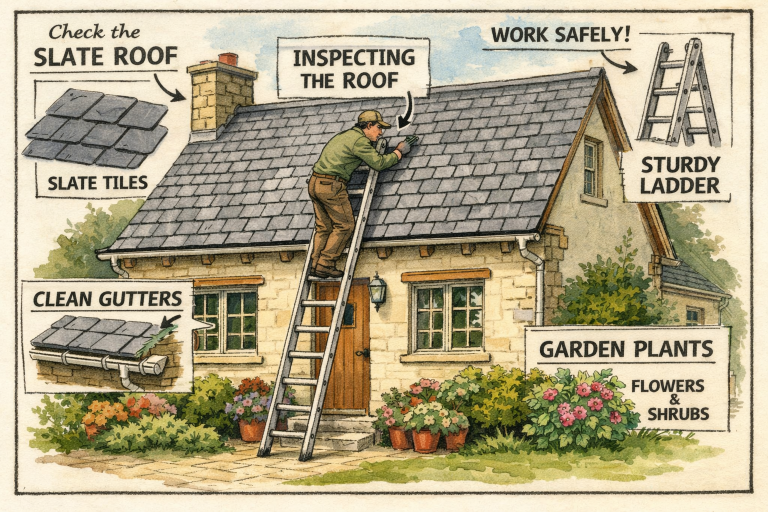
One of the most important steps in slate roof maintenance is conducting regular inspections. Homeowners should inspect their roof at least twice a year, ideally in spring and fall. It is especially crucial to inspect the roof after severe storms or wind events, as weather can loosen or damage individual slates. Areas where roof planes intersect, such as valleys and ridges, are more prone to leaks and should be given extra attention during inspections. When inspecting, always look for missing, cracked, or chipped slates. Early detection allows for small issues to be fixed before they lead to major water damage or structural failure. For more tips on how to spot roofing issues, resources like the House Beautiful roof repair guide can provide additional guidance.
Prompt Repairs
If you notice any damaged or missing slates, prompt repair is essential. Delaying repairs, even for seemingly minor cracks or holes, can allow water to penetrate the surface. This can cause the underlying wooden structure to rot or grow mold. Only an experienced slate roofer should replace slates, as improper installation can lead to further issues, including leaks or tiles slipping out of place. It is best to use replacement slates that match the original ones in size, color, and thickness, preserving both the function and appearance of your roof.
Gutter Maintenance
Clean gutters and downspouts play a critical role in preventing water buildup on a slate roof. Blocked gutters allow water to back up and seep beneath the slates, putting your roof and attic at risk for leaks and water damage. Inspect your gutters regularly and clear out leaves, twigs, or other debris, particularly after autumn. Checking for sagging or detached gutters is also important, as these issues can compromise water drainage. Ensuring proper water flow reduces unnecessary wear and tear and helps maintain the structural integrity of your roof.
Flashing Care
Flashing refers to metal strips placed along roof seams, valleys, and around chimneys to direct water away from vulnerable areas. Over time, flashing can deteriorate, rust, or become dislodged, allowing water to infiltrate your home. Regular inspection and timely replacement of flashing are critical, particularly in older homes. Worn or loose flashings should be repaired by professionals using materials compatible with slate roofing, such as copper or lead-coated copper, which provide long-lasting protection.
Moss and Algae Control
Humid weather and shade can encourage moss, lichen, or algae growth on slate roofs. Though moss may look harmless, it retains moisture against the slate and can accelerate deterioration by causing freezing and thawing stress. Over time, this moisture can seep beneath the tiles and threaten the structural decking. To remove moss, use a soft brush and a gentle, environmentally safe cleaning solution; do not use pressure washers or abrasive cleaners, as these can damage the tiles. Some experts recommend installing zinc or copper strips near the roof ridge to discourage growth naturally, as rainwater carries small amounts of metal down the roof surface.
Professional Assistance
While homeowners can handle minor cleaning and gutter work, many aspects of slate roof maintenance require specialized knowledge and tools. Professionals are best equipped to assess less-visible issues and perform intricate repairs without causing further damage. Regular professional inspections can reveal worn fasteners, subtle leaks, and underlying structural challenges. Certified slate roofing specialists understand the proper techniques to address any issues, keeping with the roof’s original character and the manufacturer’s recommendations. A useful reference for understanding when to call a professional is the House Beautiful roof repair article, which outlines common warning signs requiring expert intervention.
Avoiding Common Mistakes
Homeowners should avoid walking or placing heavy objects on slate roofs, as this can cause tiles to crack or break. Using inappropriate materials to fix leaks, such as sealants, tar, or roofing cement, may trap moisture beneath the slates, leading to further decay. Instead, the focus should always be on proper slate replacement and professional repair techniques. These methods are not only safer but also preserve the lifespan and appearance of your roof.
Conclusion
A slate roof is a significant asset, offering a blend of timeless aesthetics and incredible durability. With regular inspections, vigilant maintenance, and professional expertise, homeowners can keep their slate roof in optimal condition for many decades. Long-term durability is achievable with preventive care, routine cleaning, and an informed approach to repair, allowing you to confidently protect your home and enjoy the elegance of natural slate year after year.
 Mike
Mike