

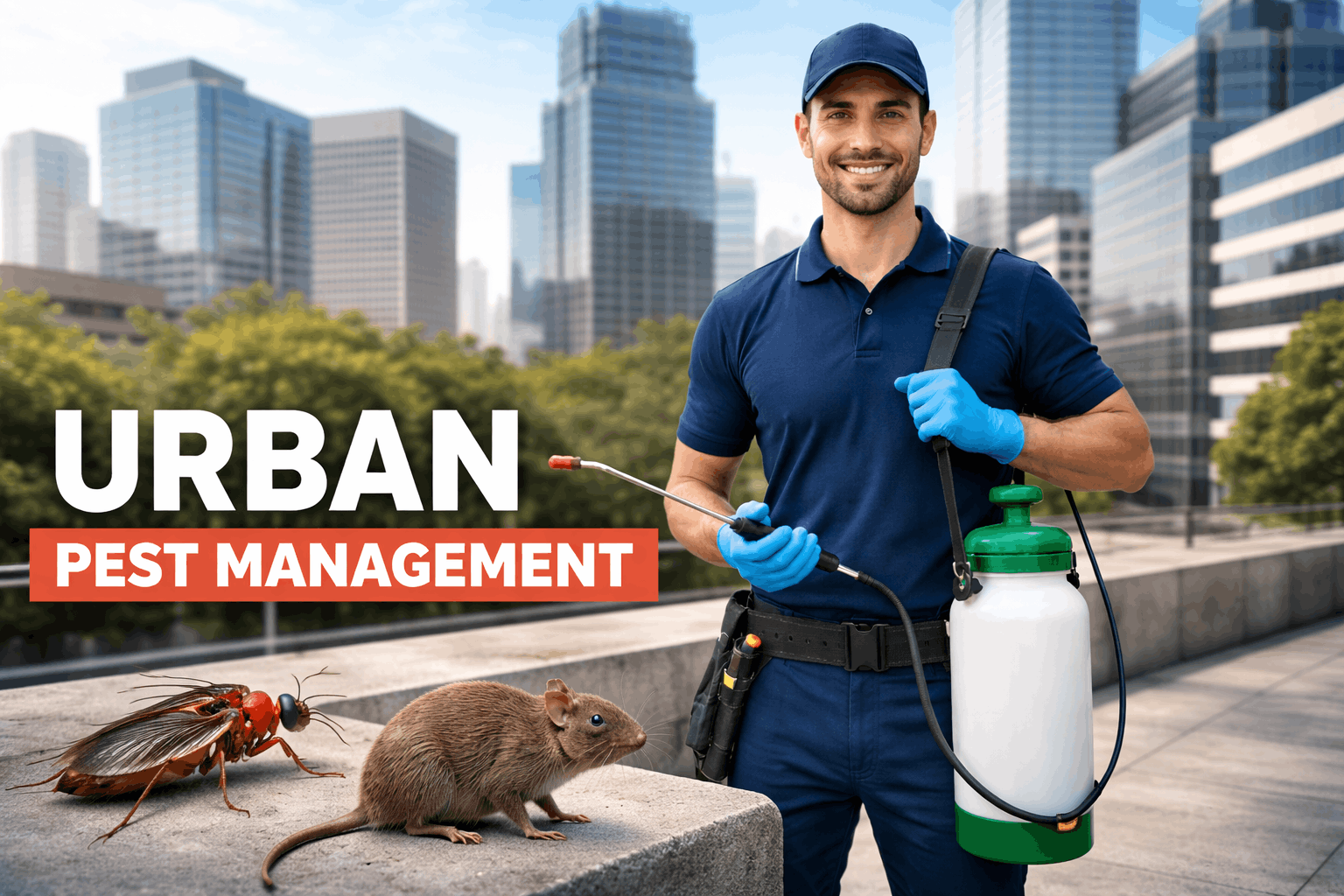
New Research Trends in Urban Pest Management
As urban populations continue to grow, so do the challenges associated with maintaining healthy and pest-free living environments. Urban pest management is a critical component of city planning and public health, tasked with controlling pest populations that can threaten human health, property, and the environment. Recent research in the field of urban pest management has introduced innovative strategies and technologies designed to improve efficiency and sustainability. This article explores these cutting-edge trends and their implications for the future of pest control in urban settings.
1. Integrated Pest Management (IPM) Strategies
Integrated Pest Management (IPM) has long been a cornerstone of effective pest control, combining biological, cultural, physical, and chemical tools to manage pest populations in an economically and environmentally sustainable way. Recent research has focused on refining IPM strategies with advanced monitoring techniques, including the use of smart traps and remote sensing technology. These innovations allow for real-time data collection and analysis, enabling pest control professionals to make informed decisions and reduce the reliance on chemical pesticides.
2. Biotechnological Advances
Advances in biotechnology are opening new avenues for pest management solutions. Genetic engineering and microbial biopesticides offer targeted approaches to controlling pest populations without harming non-target species or the environment. For instance, genetically modified mosquitoes that are unable to reproduce are being released in certain areas as a means to control populations that spread diseases like dengue and Zika. Similarly, the use of entomopathogenic fungi and bacteria is gaining traction as an environmentally friendly alternative to traditional pesticides.
3. Urban Ecology and Habitat Modification
Understanding the ecological dynamics of urban environments is crucial for effective pest management. Research is increasingly focused on how urbanization impacts pest behavior and distribution. By altering urban habitats, such as improving green spaces and reducing food waste, cities can create environments less conducive to pest proliferation. Habitat modification, combined with community engagement initiatives, can lead to sustainable pest management practices that are less reliant on chemical interventions.
4. Digital Tools and Data Analytics
The integration of digital tools and data analytics is transforming urban pest management. Mobile applications and cloud-based platforms are enabling better communication and collaboration among pest control professionals and residents. These tools facilitate the collection of geospatial data, which can be analyzed to predict pest outbreaks and optimize control measures. By leveraging big data, pest control companies can enhance their service delivery and improve the effectiveness of their interventions.
For cities like Huntsville, where urban pest challenges are prevalent, these research trends offer promising solutions. Companies specializing in Huntsville pest control are already adopting some of these advanced strategies to provide more effective and sustainable pest management services.
Conclusion
The future of urban pest management lies in innovation and sustainability. By embracing new research trends and technologies, cities can effectively manage pest populations while minimizing environmental impact and safeguarding public health. As urban areas continue to expand, the need for adaptive and forward-thinking pest management strategies will only become more critical.