

The Foundation: Planning Your Remodel

Do you dream of a more beautiful and functional home? For many homeowners, the journey begins with renovating the kitchen and bathroom. These rooms are much more than just spaces for daily tasks. They are the heart of your home, setting the tone for comfort, style, and efficiency.
A thoughtful kitchen or bathroom renovation can dramatically improve your living space. It not only boosts your home’s aesthetic appeal but also increases its overall value and your personal enjoyment. We understand that taking on such a project can feel overwhelming. There are many decisions to make, from design choices to material selections and managing the project itself.
That’s why we have created this extensive guide. We will break down the key elements for a successful kitchen and bath remodel. Our aim is to provide you with clear, actionable insights. We will cover crucial steps like defining your goals, setting a realistic budget, and choosing the right style. We will also dig into essential considerations for both kitchen and bathroom updates, ensuring a high return on investment (ROI) for your efforts.
Join us as we explore how to transform these vital areas of your home into spaces you will love for years to come.
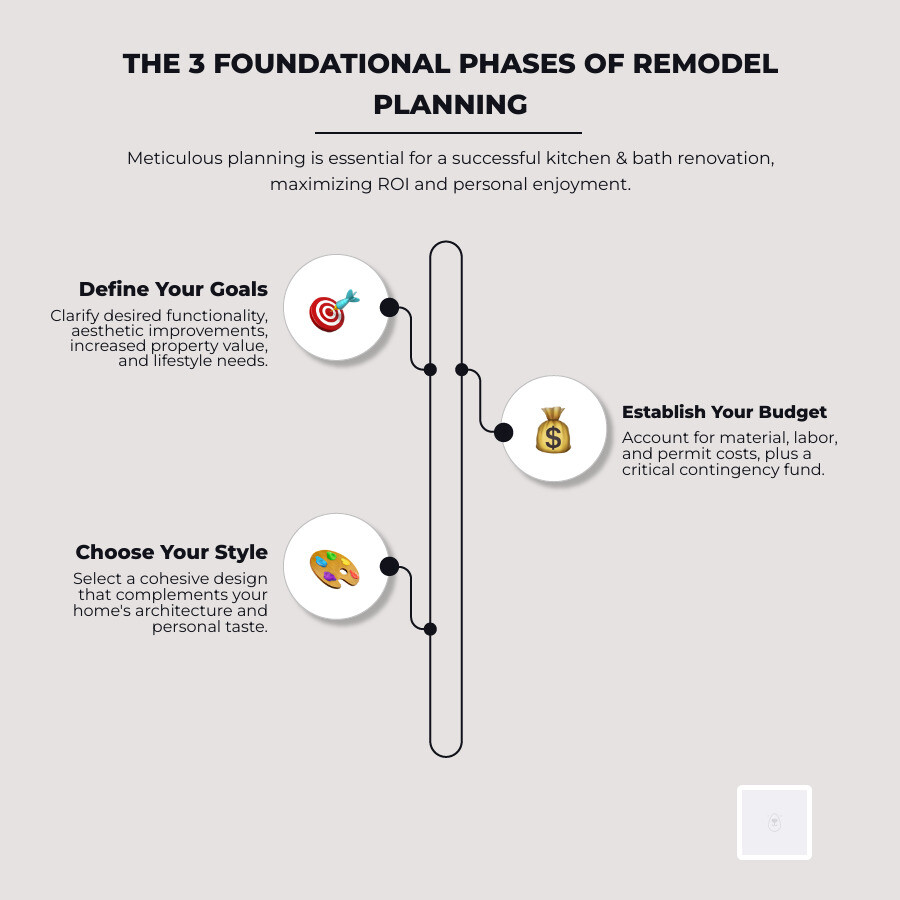
Every successful interior home renovation begins with meticulous planning. Without a solid plan and budget, things can escalate and get out of hand very easily. Homeowners spent a staggering $463 billion on home renovations in the first quarter of 2024 alone, highlighting the significant investment involved. For many, this investment often translates into substantial dividends, with the average ROI of a remodeling project pegged at 69%. However, to truly maximize this return and ensure satisfaction, a clear roadmap is essential.
Defining Your Goals for an Interior Home Renovation
Before picking out paint swatches or browsing appliance catalogs, it’s crucial to define what you want to achieve with your remodel. Are you looking for improved functionality, aesthetic updates, or an increase in property value? Perhaps a combination of all three?
- Functionality Improvements: Do you need more storage in your kitchen, better workflow, or a more accessible bathroom? Consider how you currently use the space and what pain points exist.
- Aesthetic Updates: Are you tired of outdated finishes or a cramped layout? Think about the mood and style you want to create – a serene spa-like bathroom or a vibrant, modern kitchen.
- Increased Property Value: If resale is a consideration, focus on renovations known for a strong return on investment. Minor kitchen remodels and certain bathroom updates often lead the way here.
- Space Planning: For smaller rooms, how can you maximize space and storage? This might involve built-in solutions, clever layouts, or even visual tricks to make a room feel larger.
- Lifestyle Needs: Does your home need to adapt to a growing family, a new work-from-home setup, or aging-in-place considerations? Your renovation should support your evolving lifestyle.
By clearly outlining these goals, you create a framework for all subsequent decisions, ensuring your renovation is purposeful and delivers the desired outcome.
Establishing a Realistic Budget and Timeline
Once your goals are clear, the next critical step is establishing a realistic budget and timeline. Homeowners spent a median price of $18,000 on home improvements in 2021, but kitchen and bath remodels can vary widely. A budget of $100,000+, for instance, could cover a kitchen (around $27,000 on average), a bedroom (approximately $4,000), a bathroom (an average of $11,000), and a basement (around $18,000), with room for high-end touches.
Your budget should account for:
- Material Costs: This includes everything from flooring and countertops to fixtures and cabinetry.
- Labor Costs: The fees for contractors, plumbers, electricians, and other specialists.
- Permit Fees: Depending on the scope of work, permits are often required by local authorities.
- Contingency Fund: Always allocate an additional 10-30% of your total budget for unexpected issues and expenses. This buffer is crucial, as unforeseen problems (like finding damaged pipes during demolition) are common.
For the timeline, be realistic. A full bathroom remodel, for example, can take 8-12 weeks. Break your project into phases and map tasks to weekly or monthly timelines. Account for lead times on materials, potential inspection delays, and build in a buffer of 10-15% more time. Rushing the process often leads to costly mistakes and compromises on quality.

Choosing a Style That Complements Your Home
The renovation style you choose should not only reflect your personal taste but also complement your home’s existing architecture. A cohesive design ensures your renovated spaces feel like a natural extension of your home, rather than an abrupt departure.
- Architectural Harmony: Consider the age and style of your home. A Victorian home might benefit from a renovation that blends historic charm with modern convenience, rather than a starkly contemporary design. Conversely, a mid-century modern home would shine with designs that honor its clean lines and functional aesthetic.
- Color Palettes and Materials: These play a huge role in defining a style. Muted tones and natural wood might suit a Nordic-inspired design, while bold colors and high-contrast elements could define an Old Hollywood glam look.
- Inspiration Sources: Gather inspiration from interior design magazines, websites like Apartment Therapy and Pinterest, and even local home tours. Pay attention to what appeals to you and how different elements combine to create a particular mood. Avoid focusing solely on fleeting trends, as you don’t want to regret a big and expensive choice in just a few short months. Aim for timeless elements that you can personalize with easily changeable decor.
For a deeper dive into various aesthetics, exploring different interior design styles can help you pinpoint what resonates most with your vision.
High-Impact Interior Home Renovation: Kitchen Essentials
The kitchen is often called the heart of the home, and for good reason. It’s where families gather, meals are prepared, and memories are made. Consequently, it’s also the room that offers one of the best returns on investment when remodeled, especially if you plan to stay in your home. Even minor kitchen remodels that are mostly cosmetic fixes, like refacing cabinets or installing new countertops, can recoup up to 96 percent of their cost. While full kitchen remodels typically get you back about 38 percent of your investment, the daily enjoyment and increased functionality often make it worthwhile.
Optimizing Layout for Functionality and Flow
A functional kitchen layout is paramount. The classic “work triangle” (the path between the sink, refrigerator, and stove) remains a fundamental principle for efficient workflow. However, modern kitchens often accept open-concept living, requiring a more dynamic approach to layout.
- Open-Concept Living: If you’re considering an open-concept kitchen, think about how it integrates with adjacent living or dining areas. This layout promotes social interaction but requires careful planning to maintain distinct zones.
- Peninsula vs. Island: Replacing an ill-fitting peninsula with an island for better flow and functionality can free up much-needed counter space and provide additional seating or prep areas. Islands are incredibly versatile and can house sinks, cooktops, or simply serve as a large workspace.
- Appliance Placement: Strategically placing appliances minimizes steps and optimizes workflow. Consider built-in appliances for a seamless look and smart appliances for added convenience.
- Storage Solutions: Maximizing storage is key, especially in smaller kitchens. Ceiling-height cabinets, pantry units that wrap around a refrigerator, and clever drawer organizers can dramatically increase capacity and reduce clutter.

Selecting Durable and Stylish Materials
The materials you choose for your kitchen will define its aesthetic and durability. Achieving a high-end look on a moderate budget often comes down to smart material choices.
- Countertop Materials:Quartz: A popular choice for its durability, non-porous nature, and wide range of colors and patterns. It offers a luxurious look with minimal maintenance.
- Granite: A natural stone known for its unique patterns and heat resistance. Requires sealing but offers timeless elegance.
- Marble: Exudes classic luxury but is softer and more porous, requiring more maintenance to prevent stains and etching.
- Laminate: A budget-friendly option that has come a long way in mimicking higher-end materials.
- Cabinet Finishes: From classic shaker to sleek flat-panel, cabinet style sets the tone. Consider painting existing cabinets for a cost-effective refresh, or opt for new cabinetry that offers better storage solutions and a fresh look.
- Backsplash Tile: The backsplash is an opportunity to add personality and visual interest. Options range from subway tile for a classic look to intricate mosaics or large-format tiles for a modern statement.
- Flooring: The kitchen floor needs to be both durable and aesthetically pleasing. Options include hardwood, engineered wood, porcelain tile, and luxury vinyl. For a comprehensive guide on various options, consider exploring resources on Flooring for interior renovations. The right flooring not only improves the kitchen’s look but also its long-term functionality.
- Energy-Efficient Appliances: Investing in energy-efficient appliances can save you money on utility bills in the long run and are often a selling point for future buyers.
Creating a Functional and Serene Bathroom
After the kitchen, the bathroom is another prime candidate for interior home renovation, offering significant improvements in daily living and a good return on investment. The average cost to remodel a bathroom is around $11,000, making it a more accessible project for many homeowners compared to a full kitchen overhaul. A well-designed bathroom combines functionality with a sense of serenity, changing a utilitarian space into a personal sanctuary.
Maximizing Space and Storage
Bathrooms, especially smaller ones, often present challenges in terms of space and storage. Thoughtful design can make even the most compact bathroom feel larger and more organized.
- Built-in Shelving and Niches: Use wall cavities for built-in shelving or shower niches to keep toiletries organized without cluttering surfaces.
- Recessed Medicine Cabinets: These offer hidden storage for essentials, maintaining a clean and minimalist aesthetic.
- Under-Sink Organization: Replacing older pedestal sinks with a single vanity or cabinets can provide added storage, concealing plumbing and offering drawers or shelves for towels and supplies.
- Wall-Mounted Fixtures: Floating vanities and wall-mounted toilets create an illusion of more floor space, making the room feel larger and easier to clean.
- Mirror Placement: A large mirror can reflect light and expand the perceived size of the room.
- Large-Format Tiles: Using Large Format Tiles on walls and floors can minimize grout lines, creating a more seamless and expansive look, which is particularly effective in smaller bathrooms. This is a common technique in European tile home renovations, where sleek and minimalist designs are often favored.
Essential Elements for a Modern Bathroom
A modern bathroom remodel focuses on clean lines, efficient fixtures, and a touch of luxury.
- Spa-like Features: Consider elements like walk-in showers with rain showerheads, body jets, or even steam shower capabilities. Freestanding tubs can be a stunning focal point, offering a luxurious bathing experience.
- Vanity Selection: Double vanities are popular for shared bathrooms, providing ample counter space and storage. Choose materials that are durable and moisture-resistant.
- Lighting: Layered lighting is crucial. Combine ambient lighting (overhead), task lighting (around the mirror), and accent lighting (to highlight features) to create different moods and ensure functionality.
- Universal Design: Incorporating features like curbless showers, grab bars (discreetly integrated), and comfort-height toilets makes the bathroom accessible for all ages and abilities, enhancing long-term usability.
- Water-Efficient Fixtures: Low-flow toilets, showerheads, and faucets conserve water, reducing utility bills and environmental impact.
- Ventilation: A good ventilation system is essential to prevent moisture buildup, which can lead to mold and mildew, preserving the integrity of your renovation.
- Smart Technology: From smart mirrors with integrated lighting and defoggers to digital shower controls, technology can lift the bathroom experience.
- Cozy Touches: Even with modern design, adding elements like warm wood cabinetry, soft towels, and subtle decor can bring coziness and functionality to a bathroom. Taking advantage of unique architectural shapes, such as in a converted attic bathroom, can create a spectacular home spa.
Navigating the Remodel: Materials and Professionals
Starting on a kitchen or bathroom remodel is a significant undertaking, and navigating the complexities of material selection and hiring professionals can be daunting. Making informed decisions here is crucial for the success and longevity of your project.
Key Material Considerations for an Interior Home Renovation
The choice of materials profoundly impacts the aesthetic, durability, and maintenance requirements of your renovated space. Achieving a high-end look on a moderate budget often involves a strategic mix of splurges and savings.
- Durability: For high-traffic areas like kitchens and bathrooms, prioritize materials that can withstand daily wear and tear, moisture, and temperature fluctuations. Porcelain tile, quartz countertops, and quality cabinetry are excellent choices for their resilience.
- Maintenance Requirements: Consider how much effort you’re willing to put into cleaning and upkeep. Some natural stones require regular sealing, while engineered materials often need less specialized care.
- Sustainability: If environmental impact is a concern, look for eco-friendly options such as recycled glass countertops, sustainably sourced wood, or low-VOC paints.
- Cost vs. Quality: While it’s tempting to cut corners on costs, investing in quality materials for critical components (like plumbing fixtures, flooring, and countertops) often pays off in the long run by preventing premature wear and avoiding future repairs. For less critical elements, such as cabinet hardware or decorative accents, more budget-friendly options can still achieve a stylish look.
- Cohesive Material Palette: Ensure all chosen materials work harmoniously together. Consider textures, colors, and finishes across all surfaces – from walls and floors to countertops and backsplashes – to create a unified and appealing design.
How to Choose the Right Contractor
Hiring the right professionals is arguably the most critical step in a successful home renovation project. A skilled and reliable contractor ensures your vision is executed precisely, on time, and within budget.
- Checking Licenses and Insurance: Always verify that the contractor is licensed and carries adequate insurance (liability and workers’ compensation). This protects you from potential financial liabilities.
- Reviewing Portfolios and References: Look at their past work, especially projects similar to yours. Ask for references and speak to previous clients about their experience, communication, and satisfaction with the final outcome.
- Getting Multiple Quotes: Obtain detailed bids from at least three different contractors. Compare not just the total cost, but also the breakdown of materials, labor, and project scope. Be wary of unusually low bids, as they might indicate shortcuts or hidden costs.
- Understanding Contracts: A comprehensive contract should outline the project scope, timeline, payment schedule, materials to be used, and a clear change order process. Read it carefully before signing.
- Communication: Effective communication is key. Choose a contractor who is responsive, transparent, and willing to address your questions and concerns throughout the project.
- Local Market Considerations: The contractor landscape can vary significantly by region. Understanding how different markets, like the one for Tampa interior home renovation, influence contractor selection is important. Local contractors often have a better understanding of regional building codes, preferred suppliers, and specific challenges or opportunities within that area. This local expertise can be invaluable in ensuring a smooth and compliant renovation.
Common Remodeling Mistakes to Avoid:
- Skipping Permits: Neglecting necessary permits can lead to fines, project delays, or even the need to redo work.
- Underestimating Costs: Failing to account for all expenses, including a contingency fund, can lead to financial strain.
- Neglecting Functionality for Trends: Prioritize how you use the space over fleeting design trends.
- Rushing the Planning Phase: Inadequate planning is a recipe for problems down the line.
- Poor Communication: Misunderstandings with your contractor can lead to costly errors and dissatisfaction.
- DIYing Beyond Your Skill Level: While budget-friendly, attempting complex tasks without expertise can lead to safety issues and poor results.
Frequently Asked Questions about Kitchen and Bath Remodels
We often hear similar questions from homeowners considering a renovation. Here are some of the most common inquiries, along with our insights to help guide your decisions.
Which remodel offers the best return on investment (ROI)?
When it comes to maximizing your home’s value, certain renovations consistently outperform others.
- Kitchen Remodels: The kitchen is typically your best bet for a high-impact room redo if you’re planning to stay in the home. Even minor kitchen remodels that are mostly cosmetic fixes, like refacing cabinets or installing new countertops, can recoup up to 96 percent of their cost. This makes them one of the most impactful and cost-effective home renovations. Full kitchen remodels, while more expensive, typically get you back about 38 percent of your investment, but offer significant lifestyle benefits.
- Bathroom Remodels: Updating bathrooms also offers a strong return. While the exact ROI varies, a refreshed, functional, and appealing bathroom is a major selling point.
- Flooring: Refinishing or replacing your hardwood floors can give you a lot of bang for your buck. You can recover between 118 percent and 147 percent of your investment on hardwood floors, depending on whether you’re refinishing or replacing them. This immediately transforms the look and feel of your place.
The best ROI often balances cost-effectiveness with broad appeal. Cosmetic fixes and strategic updates in kitchens and bathrooms tend to yield higher returns than overly personalized or luxury-focused overhauls.
What are some cost-effective ways to update a kitchen or bathroom?
Achieving a fresh look doesn’t always require a complete gut renovation. Many budget-friendly renovation ideas for kitchens and bathrooms can make a significant impact.
- Painting Cabinets: A fresh coat of paint can dramatically transform the look of tired kitchen or bathroom cabinets. This is far more affordable than replacing them entirely.
- Replacing Hardware: New cabinet pulls, knobs, and drawer handles are inexpensive but can instantly modernize or update the style of your cabinetry.
- Updating Light Fixtures: Changing outdated light fixtures to more contemporary or energy-efficient options can brighten a room and improve its aesthetic.
- New Faucets: Replacing old, leaky, or unattractive faucets in the kitchen sink or bathroom vanity is a relatively small investment that yields a big visual upgrade.
- Refinishing Surfaces: Instead of replacing an entire countertop or bathtub, consider professional refinishing services. This can restore their appearance at a fraction of the replacement cost.
- New Backsplash: A new kitchen backsplash can be a focal point and is often a manageable DIY project or a less expensive update than changing all the wall tiles.
- Declutter and Organize: Sometimes, the most cost-effective “renovation” is a thorough decluttering and reorganization. Maximizing space and storage in smaller rooms often starts with smart organizational solutions.
What are the most common mistakes to avoid during a remodel?
Even with careful planning, pitfalls can arise. Being aware of common mistakes can help you steer your renovation project more smoothly.
- Skipping Permits: This is a major oversight. Most structural, electrical, or plumbing changes require permits. Skipping them can lead to fines, delays, or even having to undo completed work.
- Underestimating Costs: As mentioned, always plan for unexpected issues and expenses by including a contingency fund (10-30% of your budget). Material price fluctuations and unforeseen structural problems are common.
- Neglecting Functionality for Trends: While trends are fun, prioritize the long-term functionality and livability of your space over fleeting design fads. Trends come and go quickly, and you don’t want to regret a big and expensive choice in just a few short months.
- Rushing the Planning Phase: A successful home renovation project hinges on thorough planning. Take the time to define your goals, finalize your design, and select your materials and professionals carefully.
- Poor Communication with Contractors: Maintain open and consistent communication with your contractor. Clarify expectations, ask questions, and address concerns promptly to prevent misunderstandings and costly errors.
- DIYing Beyond Your Skill Level: While some tasks are suitable for DIY, complex jobs like plumbing, electrical, or structural work are best left to professionals. Attempting them yourself can be dangerous and lead to expensive mistakes.
Conclusion
An interior home renovation, particularly a kitchen or bathroom remodel, is more than just an expense; it’s an investment in your lifestyle and your home’s future. By focusing on the key elements we’ve discussed – meticulous planning, strategic material selection, and the expertise of qualified professionals – you can transform these vital spaces into areas that are both beautiful and highly functional.
Defining your goals, establishing a realistic budget with a contingency, and choosing a style that complements your home are the foundational steps. For the kitchen, prioritize optimizing the layout for functionality and flow, and select durable, stylish materials. In the bathroom, focus on maximizing space and storage while incorporating essential elements for a modern, serene retreat.
The benefits extend beyond aesthetics; a well-executed remodel improves your daily comfort, improves your home’s efficiency, and significantly boosts its market value. While the journey can have its challenges, avoiding common mistakes and seeking professional guidance will pave the way for a rewarding experience.
We hope this guide provides you with the confidence and knowledge to start on your next interior home renovation project. With thoughtful planning and execution, you can create spaces you will cherish for years to come.
 admin
admin